





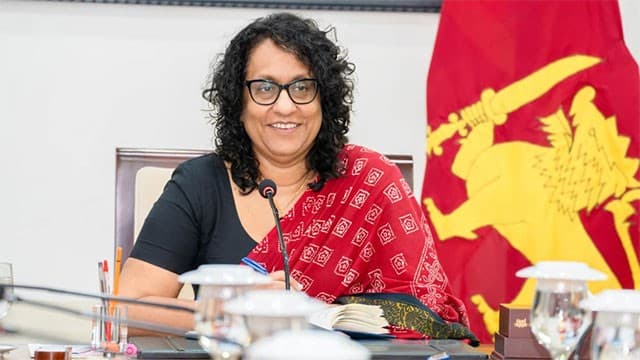



The Prime Minister and the Minister of Education, Higher Education and Vocational Education, Dr. Harini Amarasuriya has called for greater attention to the underlying causes of non-communicable diseases (NCDs), stressing that efforts to improve nutrition must go beyond providing meals to schoolchildren.
The Prime Minister made the remarks during a meeting with representatives of the World Food Programme (WFP) at the Temple Trees today (24), where discussions focused on strengthening school nutrition programmes and addressing wider nutrition and health challenges.
Prime Minister Amarasuriya said the growing prevalence of NCDs was a major concern and emphasised the need to examine the factors contributing to the continued rise of such diseases.
She stressed that the government’s school nutrition programme should not be limited to providing free meals to targeted communities. Instead, it should also promote healthier eating habits, better dietary practices and greater nutritional awareness throughout the school system.
The Prime Minister noted that nutrition remains a major concern and highlighted the importance of integrating efforts to promote healthy diets with stronger primary and preventive healthcare.
The government’s school nutrition programme is currently being implemented in targeted schools and among identified families, while nutrition interventions have also been introduced at the early childhood level.
WFP pledges continued support
WFP representatives reaffirmed the organisation’s readiness to continue its partnership with the government of Sri Lanka and support efforts to strengthen school nutrition programmes.
The delegation welcomed the positive changes already taking place and expressed interest in working more closely with the government and other stakeholders to expand and improve nutrition interventions within the education system.
The WFP also stressed the importance of strengthening cooperation among universities, the Ministry of Education, United Nations agencies and other relevant institutions to improve the effectiveness of nutrition-related interventions.
Prime Minister Dr. Amarasuriya emphasised that policies addressing nutrition and NCDs should be based on research, reliable evidence and a clear understanding of the root causes of the country’s nutritional and health challenges.
The meeting was attended by WFP Representative and Country Director Philip Ward, Deputy Country Director and Head of Programmes Robert Oliver, Professor Jayashree Arcot of the University of New South Wales, Sydney, along with WFP representatives and officials from the Ministry of Education, Higher Education and Vocational Education.