







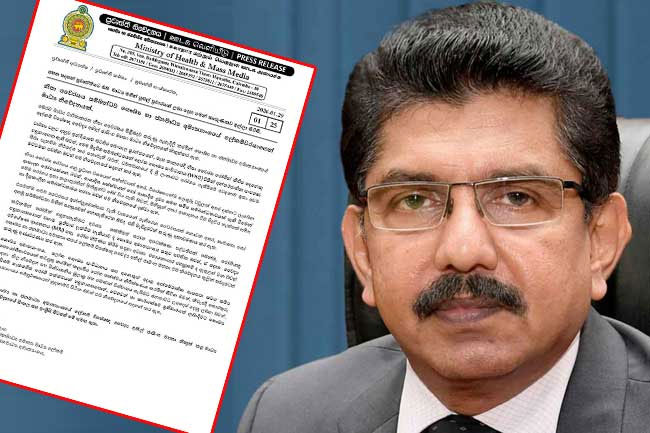



The Ministry of Health and Mass Media has issued an official statement addressing public concerns following recent media reports on the Nipah virus.
The statement confirmed that several cases of the Nipah virus have been reported in West Bengal of India.
However, the World Health Organization (WHO) has not imposed or recommended any international travel restrictions in response to the situation.
Accordingly, health authorities emphasized that the risk of transmission to Sri Lanka is considerably minimal.
The ministry explained that the Nipah virus is a zoonotic disease primarily found in animals, particularly fruit bats (megabats), and that transmission to humans occurs only in rare instances through close contact with infected animals or contaminated materials.
Human-to-human transmission is also limited and requires prolonged and close contact, the statement said.
The statement further reveals that the virus does not spread through the air such as influenza and cannot be transmitted through casual or everyday interactions.
Secretary to the Ministry of Health and Mass Media, Specialist Dr. Anil Jasinghe, stated that the Ministry of Health maintains a comprehensive and well-established disease surveillance system capable of early and prompt detection of infectious diseases.
He further noted that the country is equipped with advanced diagnostic facilities, including laboratory testing capacity at the Medical Research Institute (MRI), ensuring swift identification and response if a Nipah patient is identified.
The statement also highlighted that the Ministry of Health continues to closely monitor regional disease outbreaks in collaboration with the WHO and other relevant international partners.
The public has been strongly advised to rely only on official announcements and verified sources for accurate information, while reassuring that the health sector remains fully prepared to implement rapid and effective control measures should any suspicious disease situation be identified.