










The U.S.-Israeli war with Iran could leave consumers and businesses worldwide facing weeks or months of higher fuel prices even if the week-old conflict ends quickly, as suppliers grapple with damaged facilities, disrupted logistics, and elevated risks to shipping.
The outlook poses a global economic threat and a political vulnerability for U.S. President Donald Trump leading into the midterm elections, with voters sensitive to energy bills and unfavorable to foreign entanglements.
“The market is shifting from pricing pure geopolitical risk to grappling with tangible operational disruption, as refinery shutdowns and export constraints begin to impair crude processing and regional supply flows,” JP Morgan analysts said in a research note on Friday.
The conflict has already led to the suspension of around a fifth of global crude and natural gas supply, as Tehran targets ships in the vital Strait of Hormuz between its shores and Oman, and attacks energy infrastructure across the region.
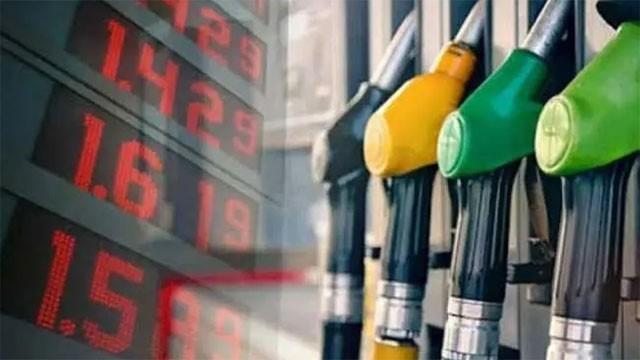
Global oil prices have surged more than 25% since the start of the war, driving up fuel prices for consumers worldwide.
A nearly complete shutdown of the Strait means the region’s giant oil producers - Saudi Arabia, the United Arab Emirates, Iraq and Kuwait - have had to suspend shipments of as much as 140 million barrels of oil - equal to about 1.4 days of global demand - to global refiners.
As a result, oil and gas storage at facilities in the Middle East Gulf are rapidly filling, forcing oil fields in Iraq and Kuwait to cut oil production, with the United Arab Emirates likely to cut next, analysts, traders and sources said.
“At some point soon, everyone will also shut in if vessels do not come,” said a source with a state oil company in the region, who asked not to be named.
Oilfields forced to shut in across the Middle East as a result of the shipping disruptions could take a while to return to normal, said Amir Zaman, head of the Americas commercial team at Rystad Energy.
“The conflict could be ended, but it could take days or weeks or months, depending on the types of fields, age of the field, the type of shut-in that they’ve had to do before you can get production back up to what it once was,” he said.
Iranian forces, meanwhile, are targeting regional energy infrastructure - including refineries and terminals - forcing them to shut down too, with some of those operations badly damaged by attacks and in need of repairs.
Qatar declared force majeure on its huge volumes of gas exports on Wednesday after Iranian drone attacks and it may take at least a month to return to normal production levels, sources told Reuters. Qatar supplies 20% of global LNG.
Saudi Aramco’s mammoth Ras Tanura refinery and crude export terminal, meanwhile, has also closed due to attacks, with no details on damage.
The White House has justified the attack on Iran, saying the country posed an imminent threat to the United States, although it has not provided details. Trump has also said he was concerned about Iran’s efforts to obtain a nuclear weapon.
DANGER IN THE STRAIT
A quick end to the war would soothe markets. But a return to pre-war supply and pricing could take weeks or months, depending on the extent of the damage to infrastructure and shipping.
“Considering physical damage due to Iranian strikes, so far we have not seen anything that would be considered structural, although the risk remains as long as the war continues,” said Joel Hancock, energy analyst, Natixis CIB.
The biggest question for energy supplies is how and when the Strait of Hormuz will become safe for shipping again. Trump has offered naval escorts to oil tankers and promised U.S. insurance support to vessels in the region.
But safety in the waterway may be elusive, as Iran has the capacity to sustain drone attacks on shipping for months, intelligence and military sources have said.
The conflict could also encourage countries to top up their strategic petroleum reserves in the weeks and months after the conflict ends, by exposing the dangers of thin inventories. That would increase demand for oil and support prices.
GLOBAL ECONOMIC, POLITICAL RISK
In the meantime, the disruption in energy shipments is reverberating through supply chains and economies in import-reliant Asia, which sources 60% of its crude oil from the Middle East.
In India, state-run Mangalore Refinery and Petrochemicals (MRPL.NS), opens new tab declared force majeure on gasoline export cargoes, sources said this week, joining a growing number of refineries in the region unable to fulfill sales contracts due to lack of supply.
At least two refineries in China have cut runs. China, a big supplier to the region, has asked refineries to suspend fuel exports. Thailand has also suspended fuel exports, while Vietnam has suspended crude shipments.
Disruption has given Russia a boost. Prices for Russian crude cargoes have risen as the U.S. has given Indian refiners a 30-day waiver to buy Russian crude to substitute for lost Middle East supply. Washington had pressured India to cut Russian oil imports under the threat of tariffs.
In Japan, the No. 2 global LNG importer, baseload power futures for Tokyo for the fiscal year starting in April jumped more than a third this week on the EEX in anticipation of higher fuel prices. And in Seoul, drivers queued up at petrol stations in anticipation of rising pump prices.
For European consumers, the crisis in gas supplies and the higher prices are a double whammy. The region was hit the hardest by the disruption to gas supplies due to sanctions on Russian energy imports after Russia invaded Ukraine in 2022.
Europe turned to LNG imports to substitute for Russian pipeline gas. And Europe now needs to buy 180 more LNG cargoes than it did last year to fill gas storage to the levels needed before next winter.
The supply risks to the United States are fewer, as the country has grown in recent years into the world’s largest oil and gas producer. But U.S. crude and fuel prices rise in tandem with international crude markets, so pump prices for gasoline and diesel are affected even if domestic supply is plentiful.
U.S. average retail gasoline, for example, hit $3.32 a gallon nationally on Friday, up 34 cents over last week, according to AAA. Diesel prices, meanwhile, hit $4.33 a gallon, up from $3.76 a gallon a week ago.
Higher prices at the pump mark a major risk for Trump and his fellow Republicans as they head into midterm elections in November.
“Gasoline prices are psychologically powerful,” said Mark Malek, chief investment officer at Siebert Financial. “They are the inflation number that consumers see every single day.”
Source: Reuters
- Agencies