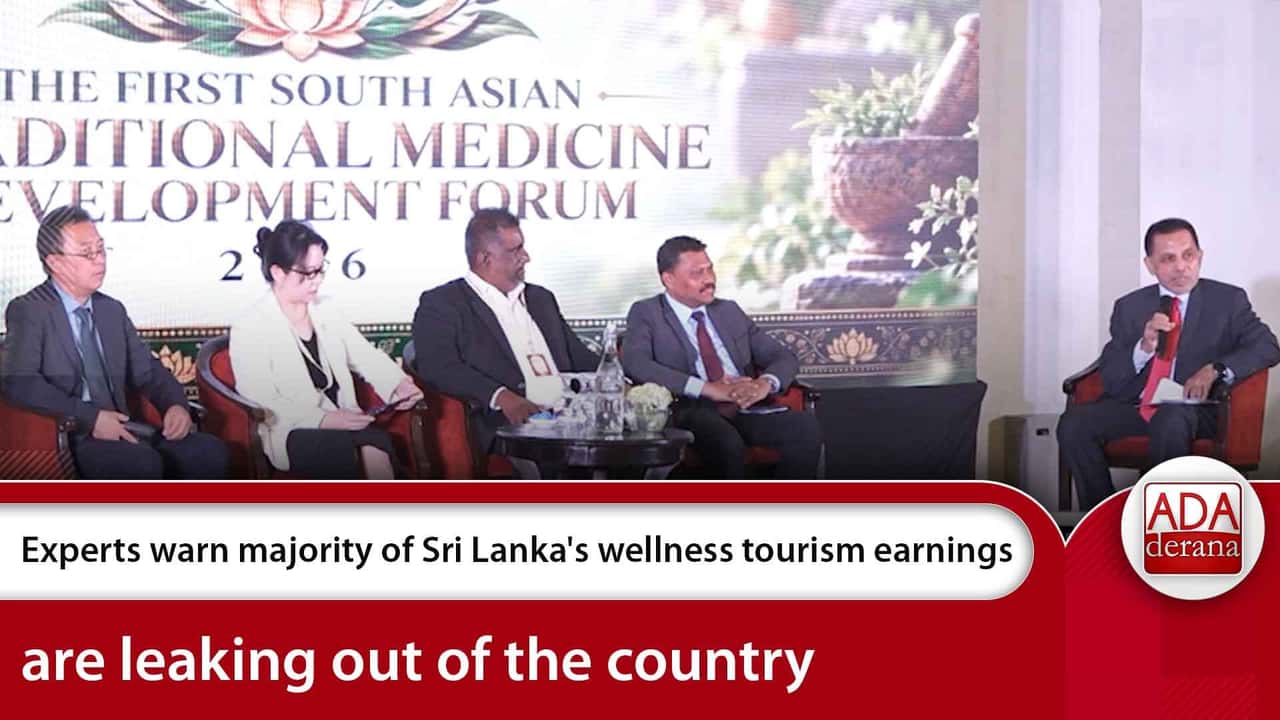







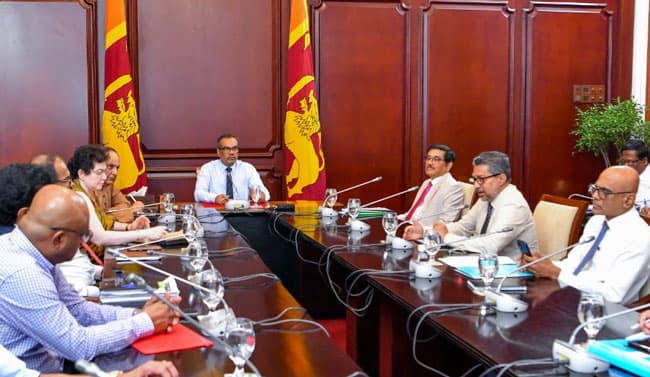


The Economic Monitoring Committee, established on the proposal by the President Anura Kumara Dissanayake to safeguard Sri Lanka’s economic stability and protect the welfare of citizens due to the conflict in the Middle East, met last afternoon (10) at the Presidential Secretariat.
The Committee is chaired by Deputy Minister of Finance and Planning and Minister of Labour, Dr Anil Jayantha Fernando, while Senior Additional Secretary to the President (Finance and Economic Affairs), Russell Aponsu, serves as the Secretary and Convener of the Committee, according to the President’s Media Division (PMD).
The members of the Committee include Governor of the Central Bank, Dr P. Nandalal Weerasinghe, Secretary to the Treasury and Secretary to the Ministry of Finance, Planning and Economic Development, Dr Harshana Suriyapperuma, Senior Presidential Adviser on the Digital Economy, Hans Wijesuriya, Senior Economic Adviser to the President, Duminda Hulangamuwa, Secretary to the Ministry of Industry and Entrepreneurship Development, Thilaka Jayasundara, Chairman of the Ceylon Petroleum Corporation, D.J.A.S. de S. Rajakaruna, Chairman of Litro Gas Lanka Limited, Channa Gunawardena, Chairman of the Sri Lanka Ports Authority, Dr Parakrama Dissanayake, Chairman of the Sri Lanka Export Development Board, Mangala Wijesinghe, Special Presidential Representative on Foreign Investment, Hanif Yusoof, Chairman of the Sri Lanka Tea Board, R.K. Obeysekara, Chairman of the Sri Lanka Tourism Development Authority, Buddhika Hewawasam and the Additional Secretary (Economic Affairs) of the Ministry of Foreign Employment and Tourism.
Amid the prevailing conflict in the Middle East, which has created an unstable global economic environment, attention was focused on the potential adverse impacts on Sri Lanka’s economy, the statement said.
Discussions also centred on the urgent measures required to stabilise the market and safeguard the interests of citizens in response to these challenges.
As a small economy, Sri Lanka is highly dependent on fuel imports, remittances from migrant workers employed in the Middle East, as well as trade and investment links with the region, it added.
Accordingly, extensive discussions were held on the risks posed by external economic shocks to Sri Lanka and the essential policy measures that must be continuously monitored and implemented to mitigate such risks.