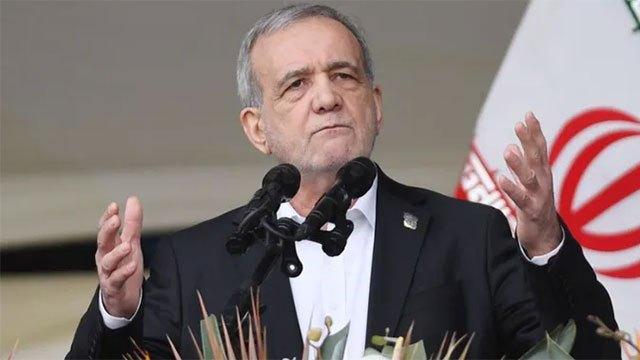







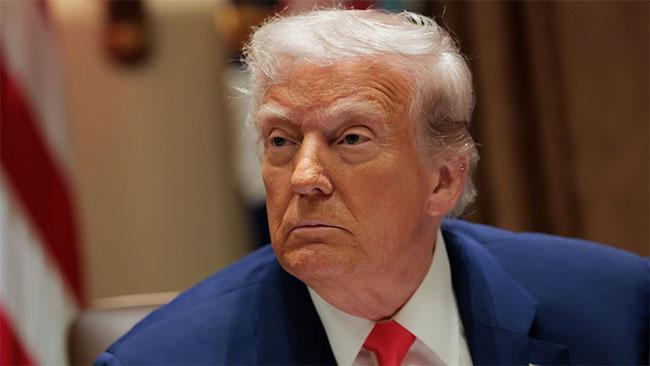


A self-imposed deadline set by President Donald Trump for Iran to reach a peace deal was looming Tuesday, as Trump escalated his threats to destroy the country’s infrastructure and talks appeared to stall.
“A whole civilization will die tonight, never to be brought back again,” Trump said in a post to his Truth Social account. “I don’t want that to happen, but it probably.” Trump earlier warned that a failure to reach an agreement by the 8 p.m. cutoff would result in U.S. military strikes on infrastructure, including every bridge and power plant in Iran.
Tehran on Monday rejected a 45-day ceasefire proposal, saying it instead wants a permanent end to the war. Trump’s rhetoric is raising questions about potential violations of international law. Over the weekend, he issued an expletive-laden message telling Iran to reopen the Strait of Hormuz or it would be “living in hell.”
At a news conference Monday alongside senior military officials, he said: “The entire country can be taken out in one night, and that night might be tomorrow night.”
In response to a question about whether he’s concerned that his threat to bomb power plants and bridges amounts to a war crime, he said no. But he added that he hopes he doesn’t “have to do it.” The U.S. also conducted strikes Tuesday on Iran’s Kharg Island, targeting dozens of military sites, including bunkers, a radar station and ammunition storage facilities, Fox News reported.
Kharg Island, Iran’s main oil export hub, has been struck previously by U.S. forces. Trump’s threats against Iranian infrastructure prompted outcry from critics around the globe, including on Capitol Hill.
Sen. Chris Van Hollen, D-Md., said such an operation would be a “textbook war crime.” Rep. Yassamin Ansari, D-Ariz., said she will introduce articles of impeachment against Defense Secretary Pete Hegseth, calling him the “chief enabler of an illegal war.” “Iran is a country of 90 million people,” she said in a video posted to X.
“Threatening them with annihilation is a monstrous war crime and puts them and American service members and Americans at grave risk.” With both chambers of Congress under Republican control, however, any articles of impeachment are unlikely to gain traction. But the congressional pushback reflects wider unease about potential strikes.
Officials in Tehran said attacks on power plants and bridges are a violation of the Geneva Conventions, while a United Nations spokesperson said he was alarmed by the rhetoric. “Civilian infrastructure, including energy infrastructure, may not be attacked,” Stephane Dujarric, a spokesman for U.N. Secretary-General Antonio Guterres said Monday. “Even if the specific civilian infrastructure were to qualify as a military objective, international humanitarian law would still prohibit attacks against them if they may be expected to cause excessive incidental civilian harm.”
The Pentagon’s Law of War manual specifies that civilian infrastructure can be targeted only if it has a clear military use and destroying it provides a definite military advantage. Bridges, for example, have often been considered legitimate targets when used to move troops or equipment, but any strike on such a target must take into account the potential risk to civilians, the manual says.
A U.S. strike last week on one of Iran’s largest bridges was justified because the structure was used by the Iranian armed forces to move missiles and missile parts, a U.S. defense official told Axios. There’s a lot of gray area when it comes to strikes on infrastructure, said Michael Eisenstadt, director of the military and security studies program at the Washington Institute for Near East Policy. In 1991, during Operation Desert Storm, the U.S. crippled Iraq’s electrical grid because, along with powering essential operations like hospitals and water purification, the plants were also used by military systems, he noted.
There are ways to strike targets that temporarily disable the infrastructure and thereby limit humanitarian impact, Eisenstadt said. In Iraq, the Pentagon said it sought to minimize casualties and collateral damage, but it was not possible to destroy the power supply to Iraqi command and control facilities without affecting the broader population. In Iran, bridges and power plants might be more sensitive, but they’re not off the board, Eisenstadt said. “A lot of this critical infrastructure is dual-use,” he said. “Bridges and roads are used by both the military and the civilian sector.”
As the deadline approached on Tuesday, Iranian officials urged young people to form human chains to protect power plants. Trump has extended previous deadlines but gave no indication this week he was willing to give another extension.
-- Agencies