

Govt. defends fuel price hike, cites surge in consumption and global oil prices
March 10, 2026 03:30 pm
The government has clarified the reasons behind the recent increase in fuel prices despite earlier assurances that sufficient fuel reserves were available in the country.
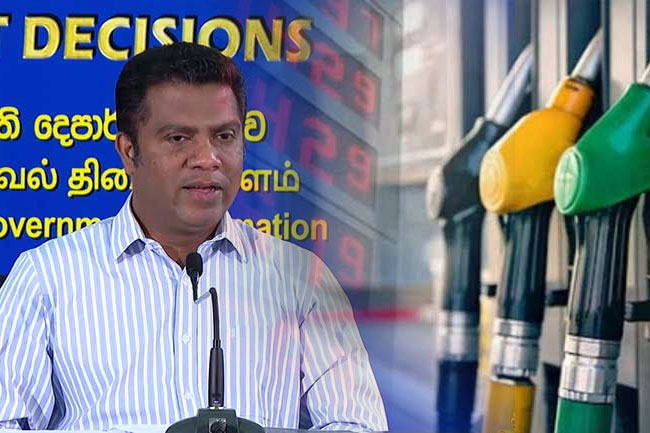
Speaking at the weekly cabinet media briefing held at the Department of Government Information, Cabinet Spokesman Minister Nalinda Jayatissa claimed that fuel consumption in the country had risen sharply over the past several days, leading to a reduction in existing reserves. As a result, new fuel shipments had to be ordered, which arrived at significantly higher global market prices, prompting the government to adjust domestic fuel prices, the Minister stated.
Minister Jayatissa noted that global crude oil prices have increased by about 37.76 percent, while refined fuel prices have surged even more sharply.
According to the Minister, auto diesel prices have risen by nearly 99.9 percent, super diesel by 99.6 percent, Octane 92 petrol by about 75 percent, and Octane 95 petrol by around 79 percent in international markets.
He explained that although Sri Lanka previously had sufficient fuel stocks and shipments were already being arranged, the price of imported fuel is determined based on the average global market price two to three days before the cargo is unloaded. As a result, newly arrived shipments were priced significantly higher.
Minister Nalinda Jayatissa also warned that if domestic prices were not increased in line with global market conditions, private fuel importers might reduce or halt imports, which could disrupt the country’s fuel supply.
The Minister further revealed that daily diesel consumption in Sri Lanka typically stands at about 4,000 metric tonnes, while petrol consumption is usually lower. However, between March 1 and March 9, diesel consumption reached 59,200 metric tonnes, while petrol consumption rose to 47,500 metric tonnes.
Accordingly, within the first nine days of March, the country consumed approximately 23,000 metric tonnes more diesel and 13,000 metric tonnes more petrol than usual, the Minister added.
According to the minister, the surge in consumption depleted existing reserves faster than expected, forcing authorities to rely on newly imported fuel purchased at higher prices.
He emphasized that although the required price increase could have been much higher, the government decided to introduce a smaller adjustment to avoid placing an excessive burden on the national economy. At the same time, the price increase is also expected to encourage the public to moderate fuel consumption during this period, Cabinet Spokesman Minister Nalinda Jayatissa stated.