










header logo
Latest
How Indian police uncovered Sri Lanka terror plot
Apr 28, 201901:16 AM
How Indian police uncovered Sri Lanka terror plot
Mobitel inner 1278

COLOMBO, Sri Lanka (AP) — While monitoring the usual channels, Indian police stumbled upon something extraordinary: a detailed plot for what would become the bloodiest attack linked to the Islamic State group in South Asia.


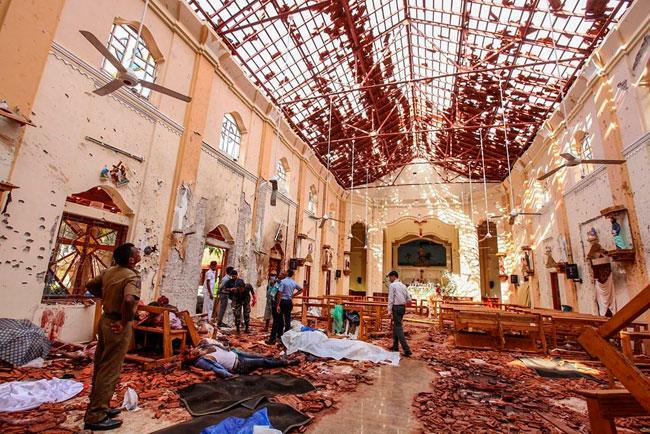
Police were investigating suspected sympathizers of the withered caliphate in southern India when a name they had no record of surfaced — National Towheed Jamaat, the Sri Lankan IS-backed militant organization that authorities say conducted the coordinated Easter Sunday attacks on churches and hotels in Sri Lanka that killed more than 250 people.


Indian police managed to break into the group’s communications and began tapping into the plot, according to Ajai Sahni, executive director of the Institute for Conflict Management in New Delhi.


“That is why the kind of detailing of the incident they received was very, very specific,” Sahni said. “They knew the group, they knew the targets, they knew the time, they knew the whereabouts of the suicide bombers, and all of this was communicated to the Sri Lankan government.”


Top Sri Lankan officials have acknowledged that some of the island nation’s intelligence units were given advance notice about the attacks — starting weeks ago and up until the morning of the bombings — but that little was done to prevent them.


Both President Maithripala Sirisena, who is also Sri Lanka’s minister of defense and in charge of national police, and Prime Minister Ranil Wickremesinghe, who has been kept out of high-level security meetings since Sirisena tried to oust him last fall, said they only learned about the plot after it had been carried out.


“The fact is, it’s very, very specific information and that has been conveyed to everyone in writing. That is the action that was missing in some cases. That’s what we’re investigating,” Wickremesinghe said.


The first intelligence brief from India arrived April 4, more than two weeks before the bombings. It said a suicide terrorist attack was planned against “some important churches” and listed six people likely to be involved.


The deputy inspector of police shared the report with at least four security unit directors, including those responsible for “VIPs” and foreign embassies, along with a memo, urging the directors to pay extra attention to the places and people in their care.


India’s final intelligence warning came just before the Easter morning blasts, Sahni said.


Why the warnings went unheeded is the subject of intense public debate, with some blaming the dismantling of a system built by former strongman President Mahinda Rajapaksa for rapid response to rebel activity during Sri Lanka’s long civil war.


The current state minister of defense, Ruwan Wijewardene, said “weakness” within Sri Lanka’s security apparatus led to the failure to prevent the Easter bombings.


Source: Associated Press


-Agencies



Disclaimer: All the comments will be moderated by the AD editorial. Abstain from posting comments that are obscene, defamatory or slanderous. Please avoid outside hyperlinks inside the comment and avoid typing all capitalized comments. Help us delete comments that do not follow these guidelines by flagging them (mouse over a comment and click the flag icon on the right side). Do use these forums to voice your opinions and create healthy discourse.

Comments

0
Comments are disabled

Note: Due to legal constraints, the Ada Derana Editorial team has taken a decision to disable comments on all articles concerning ongoing court procedures.

MostRead
Mobitel 1278
VideoStories
El Niño affecting coral reefs and marine life around Sri Lanka

El Niño affecting coral reefs and marine life around Sri Lanka

 No referendum to enact 22A? Free Lawyers Org. seeks support against 22A after President’s remarks

No referendum to enact 22A? Free Lawyers Org. seeks support against 22A after President’s remarks

 Namal in Prison: Security tightened Politicians flock to visit remanded Namal Rajapaksa at prison

Namal in Prison: Security tightened Politicians flock to visit remanded Namal Rajapaksa at prison

 “Govt. moving forward with a dictatorial agenda”

“Govt. moving forward with a dictatorial agenda”

UNP turns 80;  Ex-President Ranil leads  anniversary celebrations at Sirikotha

UNP turns 80; Ex-President Ranil leads anniversary celebrations at Sirikotha

“Decisions taken in the interest of people will not be reversed”  - President at Bulathsinhala rally

“Decisions taken in the interest of people will not be reversed” - President at Bulathsinhala rally

Farmers plead for fair price for paddy stocks; Unions threaten to sabotage President's A’pura rally

Farmers plead for fair price for paddy stocks; Unions threaten to sabotage President's A’pura rally

El Niño cripples Sri Lankan lives; Shortage of water reported in several districts

El Niño cripples Sri Lankan lives; Shortage of water reported in several districts

Litro Gas prices reduced; Milk tea and plain tea prices slashed

Litro Gas prices reduced; Milk tea and plain tea prices slashed

Over 100,000 people affected by prolonged drought in Sri Lanka

Over 100,000 people affected by prolonged drought in Sri Lanka

“This isn’t something new; Namal was imprisoned before, and so was I”

“This isn’t something new; Namal was imprisoned before, and so was I”

 Deadline ends for written submissions in relation to 22nd Amendment petitions

Deadline ends for written submissions in relation to 22nd Amendment petitions

Energy Minister assures uninterrupted power supply despite coal shortage

Energy Minister assures uninterrupted power supply despite coal shortage

SJB stages protest in Colombo against proposed 22nd Amendment Bill

SJB stages protest in Colombo against proposed 22nd Amendment Bill

Supreme Court concludes hearing of petitions challenging 22nd Amendment Bill

Supreme Court concludes hearing of petitions challenging 22nd Amendment Bill

Lassana Flora