







First a helicopter passes low over the temple, then comes the motorcade. Two big black Mercedes, soldiers, a huddle of party-workers in luxury SUVs and, at a discreet distance, a large armoured vehicle covered by a green sheet.
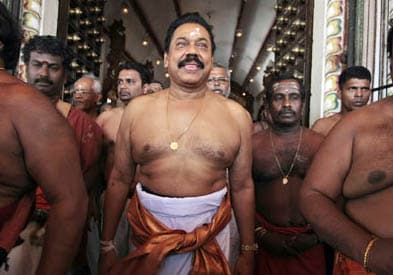
With a clatter of temple drums and clarinets, the president, smiling beatifically, strides across the dusty courtyard and strips to the waist as is customary in many such places of worship. After combing his impeccable black bouffant, he disappears into the temple.
Mahinda Rajapaksa, 64, is on the campaign trail for the second time almost in as many months. For his first public meeting he has chosen the place where he has least support: Jaffna, the northern Sri Lankan port city dominated by the nation´s largely Hindu Tamil minority.
The next stop is a nearby Buddhist temple, and then the local sports stadium, where the president speaks and asks a modest crowd for their votes in next week´s parliamentary election.
His bouffant unaffected by the 38 degree heat or the breakneck pace of his tour, Rajapaksa pledges development, tells the audience that all Sri Lankans are “children of the same mother” and is gone. Another crowd and another meeting 50 miles away await.
The president cannot have expected a particularly effusive welcome. Jaffna is the economic and cultural capital of Sri Lanka’s Tamils and suffered terribly during the 30-year conflict that pitted the separatist fighters of the Tamil Tigers (or LTTE) against Sri Lankan – and for a period Indian – troops. Thousands were forced from their homes, abducted, conscripted or killed. Much land around Jaffnaremains occupied by the Sri Lankan military. Resentment runs deep.
But if votes for Rajapaksa – who came to power in 2005 with support from hardline Sinhalese nationalist parties and adopted an uncompromising line on Tamil rights – are thin on the ground in Jaffna, they are not elsewhere. No one doubts that his party, the Sri Lanka Freedom Party and coalition partners of the ruling United People’s Freedom Alliance, will win the coming polls.
Rajapaksa won easily with 57.8% of the vote in January’s presidential elections and the only question is whether his alliance will obtain the two-thirds majority needed to push through wide-ranging constitutional changes on polling day itself. The former small-town lawyer looks certain to remain in power until 2017. In Colombo diplomats talk of the “Rajapaksa phenomenon.”
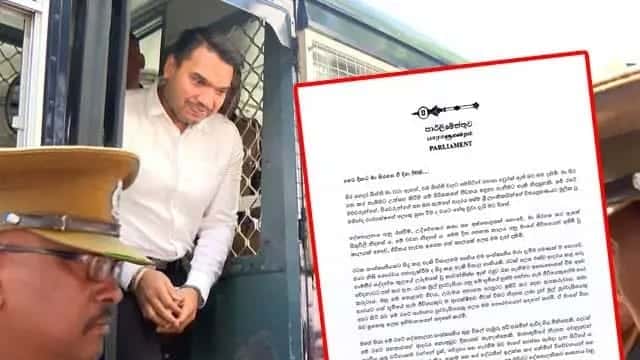
To critics, Rajapaksa owes his continued hold on power to the misuse of state resources during the presidential campaign and to the systematic intimidation of any opposition. General Sarath Fonseka, the former army chief who stood for president in January, is in jail on charges of sedition and corruption, having been arrested soon after his defeat.
Critics also allege the president has improperly appointed his family members to senior office; one brother is his senior adviser, one the top defence official, one a minister, and his son is now standing for parliament.
A series of assaults on journalists – one was killed last year – have been attributed to the government. Recently the pressure has become less intense, journalists in Colombosay, though they remain very careful. “We self-censor heavily,” said one. There is criticism of the government in the media but civil rights groups are cautious and analysts keep “well below the radar,” one said.
Rajapaksa has also been attacked for condoning or overlooking human rights abuses during the military campaigns which ended the Tamil Tiger separatists’ rule over much of the north and east of the country. The EU suspended trading privileges following charges that in the final months of the conflict civilians held as human shields by Tamil Tigers were killed by indiscriminate military shellfire. The president’s supporters deny allegations. And for the moment, they can afford to ignore them.
In places like Parakandeniya, a village 20 miles outside Colombo, no-one is really bothered by the allegations of human rights abuses or a free press. Here there are paddy fields and coconut palms and a slower pace of life than in the increasingly wealthy capital.
Prasad Kumara, the village shopkeeper, says he is one of the few locals who support the opposition. He does so out of historical loyalty and because they are “clean-handed” people.
For most others, Rajapaksa is the man who won the war against the Tamil Tigers and who is bringing development. “The main thing is the war is over,” said Nanda Warnakulaarachchige, a social worker in Parakandeniya. “We were far from the front but we were scared even to go on the busses [after bombings]. Now there is security.”
Nuwarapaksage Ranthilaka, a day labourer who chops wood for timber dealers, there is not just the “great military victory” but “the roads and the subsidies for farmers”.
“There is a wrong impression in the west. There have not been any abuses. Only bad people have been killed or intimidated,” said Ranthilaka, 40. “Once we were stuck in our homes out of fear. Now it is relaxed. And look at how much better the roads are too.”
Rajapaksa’s heartland stretches in a broad swath through the populous Sinhalese-dominated western and southern coastal and rural inland areas, from above Colombodown past his hometown in Hambantota district on the southern coast and on. It is a constituency he has cultivated assiduously over a 40-year career.
Those who have watched Rajapaksa in action speak of his talent – remembering names, joking with ordinary people, co-opting potential enemies by bringing them into his 130-strong ministerial team. He is also one of the very rare successful Sri Lankan politicians to come from beyond Colombo and its immediate surroundings.
Though from a longstanding political family, Rajapaksa plays on his “small town” image, preferring homely Sinhalese to English, wearing a trademark brown scarf and local robes and never Western clothes. When Ranthilaka the woodchopper declares that “the president understands the common people. He is the poor man’s friend”, his three colleagues nod their agreement.
Helped by a weak opposition and – according to local analysts – by western criticism which allows his supporters to promote him as defender of a small misunderstood nation against foreign governments and the local English-speaking “liberal elite” who are their allies, Rajapaksa knows how to play a crowd.
But some crowds are harder to play than others. In Jaffna, the two or three thousand who had braved the sun are quick to leave once the president has gone, stopping only for the ice-creams being handed out by a local politician. Many are party workers, brought in from outlying districts. Others are curious, wanting to see the president in person.
Some are slightly apologetic. They say simply that as the president is going to be in power for a “very long time” they might as well be on the winning side. – (Jason Burke reports from Jaffnafor The Guardian, UK)