
UK parliament votes to reject social media ban for under-16s
March 10, 2026 11:25 am
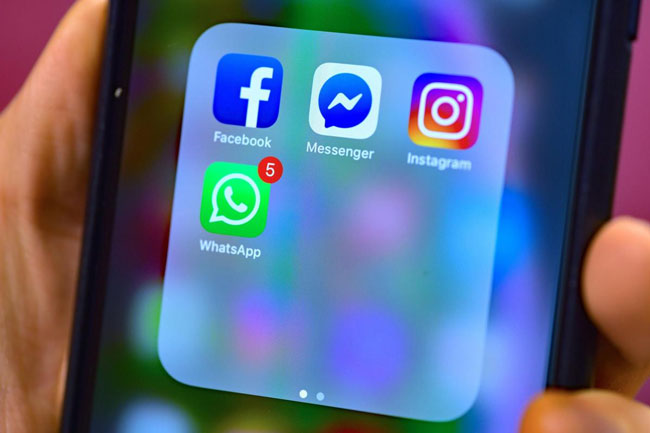
A ban on social media for under-16s has been rejected by members of parliament in the UK.
The age limit had been backed by peers earlier this year after growing calls from campaigners including actor Hugh Grant.
Supporters of the Australian-style ban said parents are in “an impossible position” over the online harms their children are being exposed to.
Others, including the National Society for the Prevention of Cruelty to Children, warned a ban could drive teenagers into unregulated corners of the internet.
MPs voted 307 to 173, majority 134, against the proposed change to the Children’s Wellbeing & Schools Bill, which was brought forward by Conservative former minister Lord Nash.
However, a ban could still come in future after the Commons supported a government bid to give additional powers to the Secretary of State.
Under the amendment in lieu, Science Secretary Liz Kendall could “restrict or ban children of certain ages from accessing social media services and chat bots”.
She could also limit children’s virtual private network use, restrict access to addictive features, and change the age of digital consent in the UK, education minister Olivia Bailey told MPs.
Lord Nash described the Commons’ vote as “deeply disappointing” and pledged to do “all that we can” to revive the amendment in the upper chamber.
As MPs considered the changes proposed by the upper chamber, Bailey said: “Many parents and campaign groups have called for an outright ban on social media for under-16s.
“Others, including children’s charities, have warned that a blanket ban could drive children towards less regulated corners of the internet or leave teenagers unprepared when they do come online.
“That is why, last week, the government launched a consultation to seek views to help shape our next steps and ensure children can grow up with a safer, healthier and more enriching relationship with the online world.”
The consultation will look at whether social media platforms should come with a minimum age requirement and whether platforms should switch off addictive features such as autoplay.
Education Committee Chair Helen Hayes said she supports “robust measures to protect children from social media harms, including raising the age of digital consent and a ban on some social media apps for under-16s and I support a statutory ban on schools”.
“There are important differences of opinion between stakeholders on the best ways to regulate young people’s access to smartphones and social media. So I believe it is right for the government to consult,” the Labour MP for Dulwich and West Norwood added.
Labour MP for Hayes and Harlington John McDonnell rebelled against the government on Monday, voting in favour of the Lords amendment.
Meanwhile, 107 Labour MPs abstained, including North Somerset’s Sadik Al-Hassan.
Al-Hassan had earlier said: “Parents like me are locked in a daily battle that they simply cannot win alone, fighting platforms that have been specifically designed to keep children hooked.
“As a pharmacist, I know if a drug were causing such measurable harm for 78%, it would be withdrawn, reformulated or placed behind a counter with strict controls on who could access it.
“We would act, because that is what the evidence demanded. The same logic must apply here.
“We have an identifiable source, we have overwhelming evidence of harm, and we have the power to act.”
Lord Nash said: “It is deeply disappointing that the House of Commons has chosen to gamble on a process which may lead to half-measures – doing little to avert the damage of social media – with no fixed timeline and no opportunity for proper parliamentary scrutiny.
“There is huge demand across the country to raise the age limit and protect children from the catastrophic harms of social media.
“Our medical professionals, intelligence community, senior police officers, teachers and parents are all clear: we are not short of evidence, we are just short of action.
“The Lords passed this amendment overwhelmingly once before.
“It would raise the age limit for harmful social media within 12 months, written into law by the summer, and I will now work with colleagues across the House to do all that we can to pass it again.”
Liberal Democrat education, children and families spokesperson Munira Wilson said: “The government’s failure to commit to a ban on harmful social media is simply not good enough – families need concrete assurances now.
“We need the government to confirm that their consultation will not result in yet more dither and delay.”
During the debate, Shadow Secretary of State for Education Laura Trott pressed the government to introduce a ban on phones in schools, saying: “Polling out today shows 40% of children are shown explicit content during the school day.
“That’s happening right now. This is an emergency. No more guidance, no more consultations. Legislate, do something about it.”
The Children’s Wellbeing and Schools Bill will now return to the House of Lords to be further considered by peers.
It will only become law if the final draft is agreed by both Houses.
If passed, the legislation will also require councils to “assess the child’s home environment within 15 days” of them being listed on a register of children not in school.
This forms part of the government’s response to the death of Sara Sharif, 10, who was murdered by her father Urfan Sharif and stepmother Beinash Batool in 2023.
Bailey also confirmed that Benedict’s law, which aims to strengthen allergy safety guidance in schools, would be put on the statute book.
Source: PA
--Agencies