






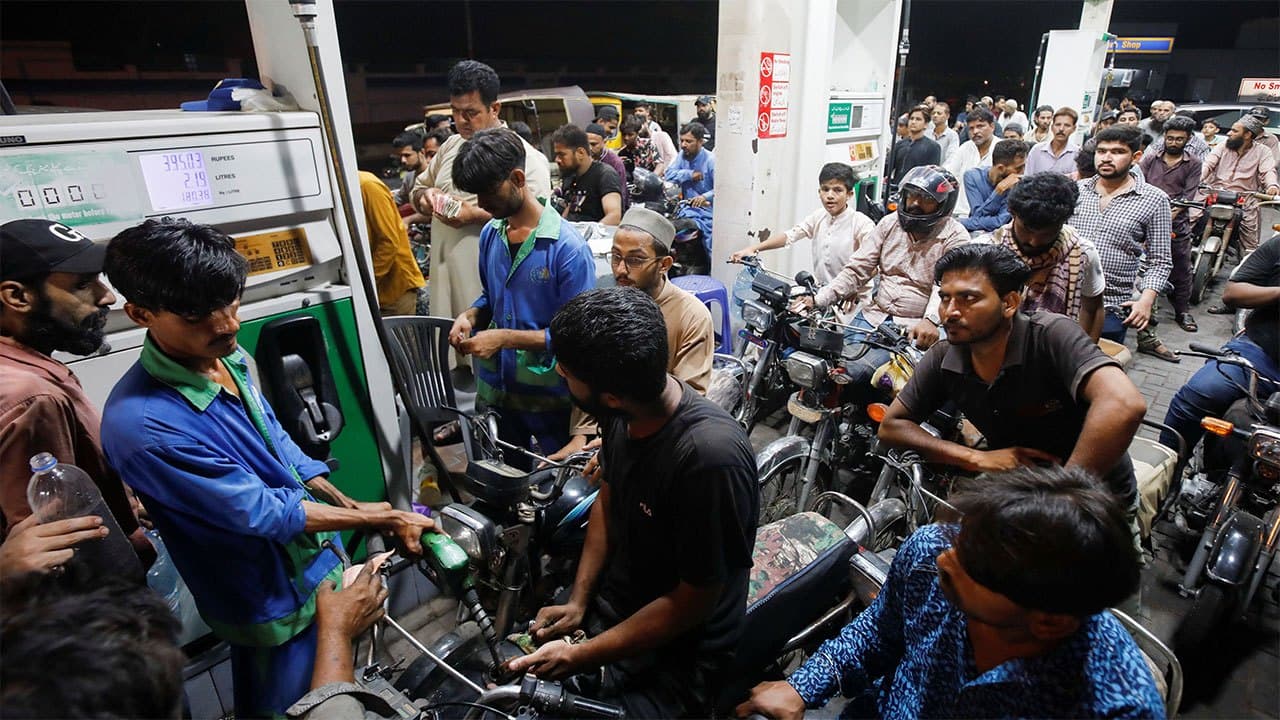



Pakistan on Thursday ordered a 50 percent cut in fuel allocations for government vehicles for three months and imposed restrictions on official travel and spending, as intensifying Middle East hostilities disrupt energy supplies and drive up petroleum prices in the import-dependent country.
The measures revive parts of an austerity drive introduced earlier this year during the US-Iran conflict and later withdrawn after diplomatic progress eased pressure on global energy markets, and come days after Islamabad approved Rs75 billion ($271 million) in targeted fuel subsidies to cushion lower-income motorists from another surge in petrol prices.
“The Federal Government, on consideration of the recommendations of the Committee for Monitoring and Implementation of Fuel Conservation and Additional Austerity Measures, has been pleased to direct the implementation of the following austerity and fuel conservation measures, with immediate effect,” the Cabinet Division said in a notification dated Sept. 17.
The government ordered a “reduction of fuel provision by fifty percent (50%) for official vehicles for three months,” exempting operational vehicles of the armed forces, civil armed forces, law enforcement agencies, essential services and the Federal Board of Revenue.
Administrative and non-operational vehicles belonging to those organizations will remain subject to the cut, while development projects are exempt.
The government also imposed a complete ban on the purchase of official vehicles and all durable goods except information technology equipment, while ordering a five percent reduction in non-employee related expenditure for the entire 2026-27 fiscal year.
The budget reduction will be deducted monthly and also apply to Pakistan’s foreign missions and officials posted abroad, although obligations relating to rent, education fees and medical care will continue to be met.
The notification imposed a “complete ban on foreign visits and travel for three months,” including obligatory visits, with exceptions for scholarships offered by international development partners, training and courses arranged through the Economic Affairs Division and travel under government institutional agreements.
For unavoidable foreign visits, ministers, advisers, ministers of state, special assistants to the prime minister, parliamentarians and other government functionaries will be required to travel economy class.
The government directed officials to hold meetings preferably through teleconferencing, banned official dinners except for visiting foreign delegations and prohibited government-funded seminars, training programs and conferences. Unavoidable events must be held at government facilities.
The measures also require a single dish to be served at all wedding-related events.
The government also said existing energy-conservation timings for businesses, first notified in June, would remain in force, requiring shops, markets, shopping malls and bazaars to close by 9 p.m., marriage halls and marquees by 10 p.m. and restaurants, cafés and food outlets by 11 p.m. Takeaway and home-delivery services are exempt.
Pharmacies, hospitals, clinics, medical laboratories, standalone bakeries and tandoors, dairy shops, fuel and CNG stations, electric vehicle charging stations, gyms, sports facilities, IT companies and call centers are also exempt from the closing restrictions.
The measures come as Pakistan faces another sharp increase in fuel costs amid renewed disruptions to energy supplies and shipping routes in the Middle East.
Petrol rose by Rs6.88 to Rs391.22 per liter on Thursday and high-speed diesel by Rs5.62 to Rs421.45, marking the eighth consecutive increase in fuel prices.
The latest pressure follows an escalation of the conflict in the Gulf, where disruptions to shipping through the Strait of Hormuz and growing threats to traffic through the Bab el-Mandeb Strait have put pressure on global energy supplies.
Brent crude has traded around the $100-a-barrel mark this week as markets assess the impact of disruptions to Middle East energy supplies.
Pakistan, which relies heavily on imported energy, has sought to shield consumers from the resulting price shock.
Under the Rs75 billion relief program approved this week, motorcycle and three-wheeler owners are eligible for a Rs100-per-liter petrol subsidy on up to 20 liters a month, while owners of cars with engines up to 800cc can receive the same discount on up to 30 liters.
But the Pakistan Petroleum Dealers Association said on Wednesday its members would not participate in the scheme under the existing mechanism, saying dealers had not been adequately consulted and raising concerns about reimbursement for subsidized fuel.
“There are around 14,000 dealers across the country, and from tonight, they will not sell petrol under the relief package,” PPDA Vice Chairman Tariq Hassan said.
The government has said the entire cost of the subsidy will be borne by the federal government and filling stations will be reimbursed through the State Bank of Pakistan, with authorities pledging to settle payments within 24 hours.
Pakistan first introduced emergency fuel-conservation measures on March 9 after the US-Iran conflict disrupted energy supplies and sent international oil prices sharply higher.
The government withdrew most of those emergency measures on June 20 after a US-Iran agreement led to a sharp decline in fuel prices, while retaining restrictions on business closing times.
The latest notification said provincial and regional governments may consider adopting similar austerity measures, while requests for exemptions will be considered case by case by the government’s monitoring committee and submitted to the prime minister for approval.
Source: Arab News
--Agencies