
Saudi Arabia evacuates Riyadh’s key financial hub amid Iran threat
April 6, 2026 09:01 pm
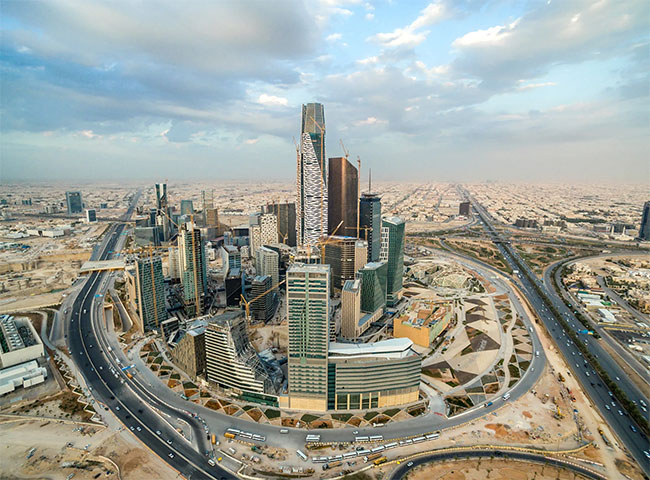
Saudi Arabia has ordered businesses to evacuate Riyadh’s main financial hub amid rising concerns over potential Iranian missile and drone attacks, in a move that underscores growing regional tensions, according to Semafor.
Companies were instructed not to send staff to the King Abdullah Financial District (KAFD), with evacuation orders issued on April 2 and expected to remain in place until at least April 6, people familiar with the matter told Semafor.
The directive affects major office towers housing global financial institutions and the kingdom’s sovereign wealth fund.
The order marks one of the clearest signs yet that Saudi Arabia’s attempt to maintain a sense of business as usual is becoming increasingly difficult as threats from Iran persist. KAFD, home to prominent firms such as Goldman Sachs and Deloitte, is a centerpiece of Riyadh’s push to position itself as a global financial hub.
Residents in KAFD’s residential towers have been advised to shelter in place, sources said, while authorities have declined to comment officially. According to The Wall Street Journal, evacuation measures also extended to other key commercial landmarks, including Al Faisaliah Tower, which houses offices of major multinational companies.
Some firms have reportedly received informal guidance to keep staff away from the financial district for several weeks, suggesting prolonged caution amid the security risks.
While Riyadh has so far avoided the scale of attacks seen in cities like Abu Dhabi, Doha and Dubai, daily life continues under a cloud of uncertainty. Traffic remains heavy, though many companies have shifted to remote work and some schools have moved online. The city’s main airport remains operational, serving as a critical transit point for people leaving the region.
However, the Saudi capital has not been entirely spared. Iran-linked strikes have previously targeted the city, including an attack near the US embassy and missile barrages during a high-level diplomatic meeting in March.
The developments pose a fresh challenge to Saudi Arabia’s efforts to attract multinational firms to establish regional headquarters in Riyadh, a policy backed by incentives as well as pressure through government contracting rules.
-- Agencies