
Iran war escalation could push global economy to brink of recession, IMF warns
April 15, 2026 04:52 pm
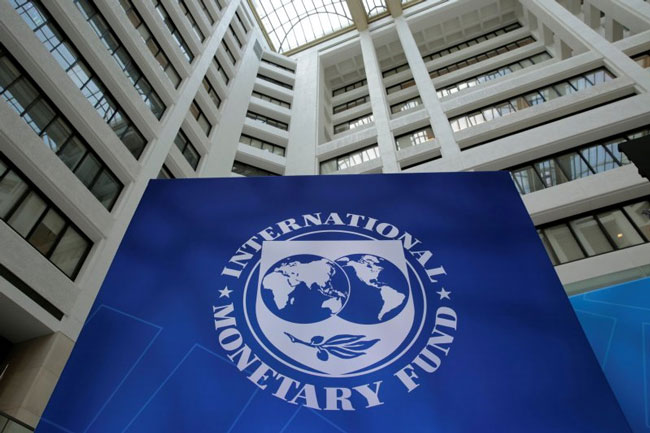
The International Monetary Fund (IMF) warned that a further escalation in the war on Iran and continued disruption to oil markets could push the global economy to the brink of recession, with growth potentially slowing to 2% under its worst-case scenario.
Speaking as the IMF’s Spring Meetings began in Washington, the organization said the damage to the global economy has already been done and that even if the war ended now, economic growth would still decline slightly.
The IMF said its worst-case scenario involves repeated shocks to energy markets that would cut global growth to 2% from the current 3.1%.
Under that outlook, oil prices could average $110 a barrel in 2026 and $125 in 2027.
IMF says damage has already begun
According to the IMF’s assessment, the war is already weighing on the world economy.
Officials said that even if the conflict stopped immediately, it would still result in weaker global growth.
But they warned that a longer and broader conflict, especially one involving more damage to infrastructure and prolonged disruption to oil supplies, would have much more severe consequences.
The IMF said such a path could also push inflation up by more than 6% next year.
Worst-case scenario sees recession risk grow
The organization said its most severe scenario would involve continuing energy market shocks and no clear end to the conflict.
In that case, global economic growth would slow to 2%
The IMF also projected that oil prices would remain elevated, averaging $110 a barrel in 2026 and rising to $125 in 2027.
That scenario, it said, would bring the world economy close to recession.
Middle scenario now looks more likely
The IMF also outlined a middle path in which the conflict lasts longer, keeping oil prices at about $100 a barrel this year and $75 in 2027.
Under that outlook, global growth would fall to 2.5% this year, down from 3.4% in 2025.
IMF chief economist Pierre-Olivier Gourinchas said that with continued energy disruptions and no clear path to ending the conflict, this middle path, or ‘‘adverse scenario,’‘ looks increasingly likely.
Short conflict would limit damage
The IMF’s most benign scenario assumes the war is short-lived and oil prices begin to normalize in the second half of 2026.
Under that view, oil would average $82 a barrel for the year.
Even in that more favorable scenario, however, the IMF said the conflict would still weigh on growth.
Developing and oil-producing countries face sharper pain
The IMF said the economic impact would not be felt equally across countries.
It said oil-producing countries in the region would face especially severe effects.
Developing countries would also be hit harder than the United States, with experts saying the economic impact there could be nearly twice as severe.
The IMF’s assessment pointed to a widening global cost from the war, with growth slowing, inflation rising, and energy market disruption deepening as the conflict continues.
Source: Türkiye Today
--Agencies