
UN Humanitarian Priorities Plan receives US$ 22 million to support those affected by Cyclone Ditwah
February 8, 2026 02:45 pm
The Sri Lanka Humanitarian Priorities Plan (HPP) launched by the United Nations Office in Colombo in December 2025 to support those affected by Cyclone Ditwah has received a total of US$ 22.4 million thus far.
At the request of the government of Sri Lanka, the Humanitarian Country Team launched the Humanitarian Priorities Plan which was seeking US$ 35.3 million to support those affected by Cyclone Ditwah between December 2025 and April 2026.
Accordingly, the UN has received funding from various institutions and countries including Australia, Canada, Germany, Japan, New Zealand, the United States, the United Kingdom as well as the European Union.
According to the latest update by the UN Office in Colombo, over 216,000 people have been reached by the HPP response to date, as implemented by 68 partner organizations across 25 Districts.
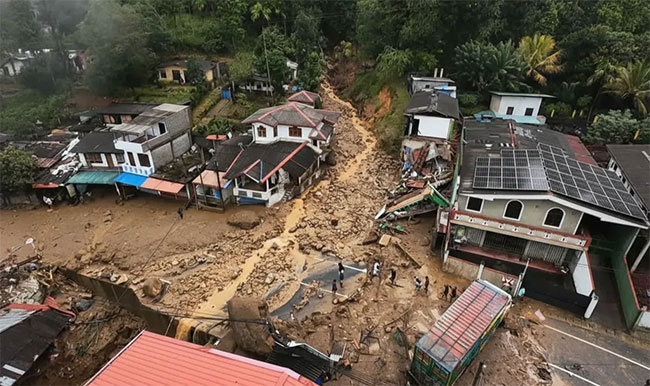
Cyclone Ditwah triggered the most extensive flooding and landslide damage in the past two decades in Sri Lanka, impacting approximately 2.2 million people across all 25 districts of the country. According to the Disaster Management Center, the cyclone had, as of 29 December 2025, resulted in 646 fatalities and left 173 people missing.
Meanwhile, the overall coordination for Cyclone Ditwah response is led by the government through national and sub national, with support from the United Nations, humanitarian partners, international and national civil society organizations, and the private sector as well as bilateral and multilateral aid.
The Disaster Management Center continues to lead operational coordination, working closely with the line ministries, district and divisional authorities to support the response planning and implementation across affected areas.
Meanwhile, the United Nations, under the leadership of the Resident Coordinator, activated the Humanitarian Country Team to support the government-led response and provide coordination to UN organizations and humanitarian partners through the HPP. Sectors activated under the HPP includes education; food security, agriculture and nutrition; health; protection; shelter, and early recovery.